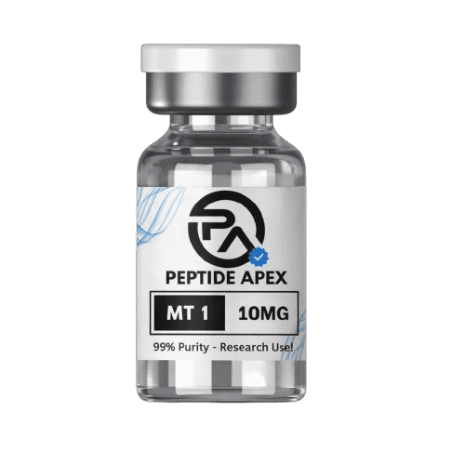
MT 1
Lyophilized powder, 10mg per vial
MT-1 (Melanotan-1) is studied in preclinical research for its interactions with melanocortin receptor systems. Researchers investigate this synthetic peptide analog for effects on melanin production and receptor signaling in controlled laboratory settings. In scientific literature, MT-1 has been examined for its potential influence on pigmentation mechanisms and cellular responses to melanocortin pathway stimulation. Laboratory research suggests this compound affects multiple physiological processes through specific receptor interactions. This research peptide is intended exclusively for in vitro studies and preclinical research conducted by qualified laboratory professionals in controlled research environments.
Research Applications
- ✓Melanocortin receptor research studies
- ✓Researchers investigate pigmentation pathways
- ✓Commonly examined in receptor signaling research
- ✓Used in preclinical cellular mechanism studies
Research Use Only: This product is for laboratory research only. Not for human consumption. Not intended to diagnose, treat, cure, or prevent any disease.
Product Information
MT-1 (Melanotan-1) is studied in preclinical research for its interactions with melanocortin receptor systems. Researchers investigate this synthetic peptide analog for effects on melanin production and receptor signaling in controlled laboratory settings. In scientific literature, MT-1 has been examined for its potential influence on pigmentation mechanisms and cellular responses to melanocortin pathway stimulation. Laboratory research suggests this compound affects multiple physiological processes through specific receptor interactions. This research peptide is intended exclusively for in vitro studies and preclinical research conducted by qualified laboratory professionals in controlled research environments.
Commonly Studied In:
- •Melanocortin receptor research studies
- •Researchers investigate pigmentation pathways
- •Commonly examined in receptor signaling research
- •Used in preclinical cellular mechanism studies